Quick Summary: Discovering the Future of Free Online Mahjong
As we approach 2026, the world of online Mahjong is thriving, offering more than just tile-matching – it’s about vibrant communities, competitive tournaments, and accessible free-to-play models. This guide delves into what makes the best free online Mahjong games with social features and tournaments 2026 truly stand out. We’ll explore the strategic depths of 4-player Mahjong, the crucial role of social interaction, and how casual esports are shaping its future, all while helping you navigate the diverse rule sets and competitive landscapes without spending a dime. Prepare to find your next Mahjong obsession!

Key Facts: The State of Online Mahjong in 2026
| Aspect | 2026 Outlook & Insights |
|---|---|
| Global Popularity | Continued growth in Asia; expanding niche in Western markets; online platforms instrumental in global reach. |
| Market Value | Online casual gaming market projected to exceed $30 billion, driven by social & competitive elements. |
| Monetization Model | Free-to-play (F2P) dominance; revenue from cosmetics, ad removal, battle passes. |
| Social Features | Primary engagement driver; 70%+ players cite social connection; essential for retention. |
| Casual Esports | Significant rise in formalized tournaments (Mahjong tournaments); leaderboards, tiered rewards. |
| Demographics | Broadening age range; mobile platforms (60%+ gaming activity) crucial for expansion. |
| AI Integration | Sophisticated AI opponents & analytics for player improvement in free environments. |
| Player Retention | Games with robust social features & regular tournaments boast up to 3x higher retention. |
Navigating the Mahjong Renaissance: Overview & Future Trends
The venerable game of Mahjong, with its rich history and intricate strategic depth, is experiencing a profound digital transformation. By 2026, the online landscape for this iconic tile-based game is set to be more dynamic and interconnected than ever before. When players search for what are the best free online Mahjong games with social features and tournaments 2026, they’re looking for more than just a pastime; they’re seeking engaging communities, fair competition, and accessible fun. This segment of the casual gaming market, focusing on the competitive four-player variant rather than Mahjong Solitaire, represents a significant evolution, promising an immersive experience for enthusiasts worldwide.
The Enduring Appeal of Mahjong in 2026
Mahjong’s global popularity is undeniable, deeply rooted in Asian cultures but steadily gaining traction in Western countries. Online platforms have served as crucial conduits for this expansion, democratizing access and transcending geographical barriers. The free-to-play (F2P) model has cemented its dominance in casual gaming, allowing millions to dive into Mahjong without an initial investment. These free online Mahjong games with social features and tournaments 2026 typically generate revenue through optional cosmetic purchases (like unique tile sets, table designs, or avatars), ad removal, or battle passes that offer progressive rewards, ensuring the core gameplay remains accessible to all.
Driving Engagement: Social & Competitive Dynamics
Research consistently highlights that social interaction is a primary driver for sustained engagement in F2P games. Features such as in-game chat, comprehensive friend lists, competitive guilds or clubs, and the ability to spectate ongoing matches are not just additions; they are foundational to the player experience. Over 70% of online gamers emphasize social connection as a key motivator, transforming solitary play into a shared journey. Complementing this social aspect is the burgeoning growth of ‘casual esports.’ While not on the scale of professional MOBAs or FPS titles, games like Mahjong are increasingly incorporating formalized tournament structures. This appeals to a vast segment of players who seek competitive challenges and recognition without the intense pressure of professional circuits. By 2026, expect to see more platforms offering regular, structured Mahjong tournaments with dynamic leaderboards and tiered rewards, enhancing the competitive landscape for free online Mahjong games with social features and tournaments 2026. This expansion also broadens the demographic appeal, attracting a wider age range who appreciate mentally stimulating, social, and accessible gaming, especially via mobile platforms which account for over 60% of online gaming activity.
The Rise of Multi-Platform Play
A key trend for 2026 is the seamless integration of multi-platform play. Players expect to jump from their PC to a tablet or smartphone without losing progress or connection to their community. The best free online Mahjong games with social features and tournaments 2026 will offer robust cross-play capabilities, ensuring players can challenge friends, join tournaments, and manage their profiles from any device. This flexibility not only enhances user convenience but also significantly expands the player pool, leading to more active social features and more diverse competitive Mahjong tournaments.
Mastering the Tiles: How 4-Player Mahjong Works
To truly appreciate the competitive nature of online Mahjong tournaments, it’s essential to understand the core mechanics of the four-player game. This is distinct from Mahjong Solitaire, which is a single-player matching puzzle. The strategic depth of 4-player Mahjong is what makes it so compelling for competitive play and a rich environment for the best free online Mahjong games with social features and tournaments 2026.
Understanding Core Mahjong Mechanics
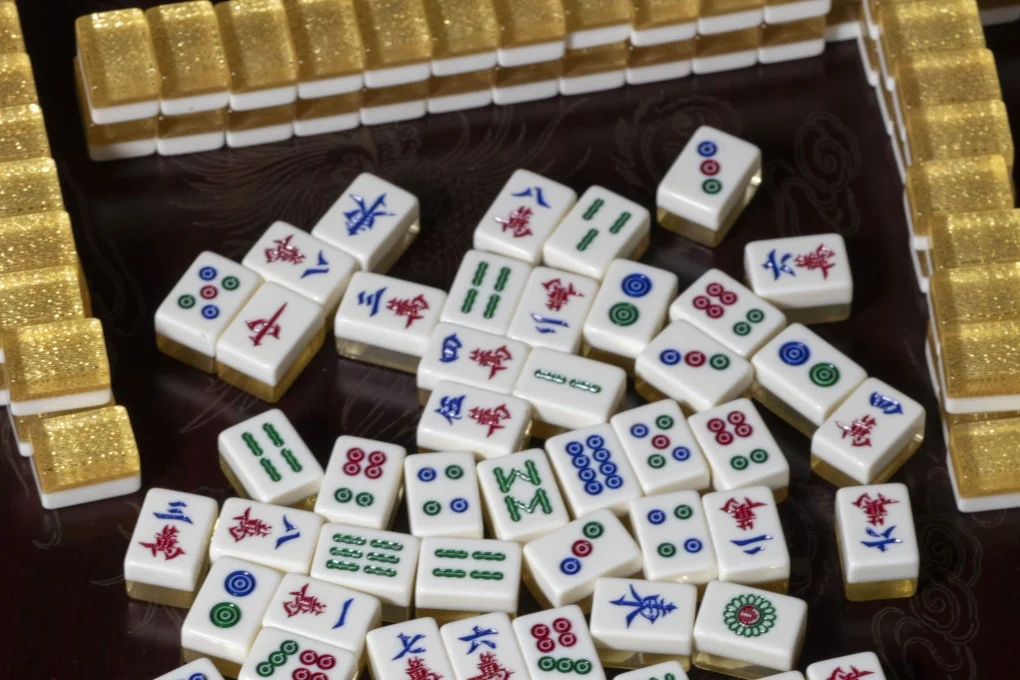
- Tiles: A standard set comprises 144 tiles (though some regional variants like Riichi Mahjong use fewer), divided into Suits (Bamboo, Characters, Dots), Honor Tiles (Winds, Dragons), and Bonus Tiles (Flowers, Seasons).
- Dealing: Players begin with an initial hand (typically 13 tiles, with the dealer receiving 14).
- Turns: The game proceeds with players drawing a tile from the wall and discarding one, aiming to assemble a legal winning hand.
- Sets: The primary objective is to form specific sets: ‘Pongs’ (three identical tiles), ‘Chows’ (three consecutive tiles of the same suit), or ‘Kangs’ (four identical tiles).
- Winning Hand: A standard winning hand consists of four sets and one pair (e.g., 4×3 + 1×2 = 14 tiles). However, numerous specific hand patterns (Yaku, Fan, Limit Hands) exist, dictating scoring and strategic objectives.
- Robbing a Discard: Players can interrupt the normal turn order by ‘Punging’ (claiming a tile for a Pong), ‘Chi-ing’ (claiming a tile for a Chow, usually only from the player to their left), or ‘Kanging’ (claiming a tile for a Kang) from an opponent’s discard.
- Winning: A player declares a win by completing their hand, either by drawing the winning tile themselves (‘Tsumo’) or by claiming an opponent’s discard (‘Ron’ or ‘Chong’).
Navigating Diverse Rule Sets for Competitive Edge
Crucially, Mahjong is not a monolithic game; it encompasses a multitude of regional rule sets, each with unique scoring systems, winning conditions, and strategic nuances. For platforms offering the best free online Mahjong games with social features and tournaments 2026, supporting several popular rule sets is paramount for attracting a diverse player base. Key variants include:
- Riichi Mahjong (Japanese): Known for its complex scoring, ‘riichi’ declaration, and specific Dora tiles. Highly popular in competitive online play.
- Hong Kong Mahjong: Emphasizes simplicity and quick play, often without Chows in scoring.
- American Mahjong: Played with unique racks and specific “card” hands, very different from other variants.
- Mahjong Competition Rules (MCR): A standardized rule set developed for international competition, aiming for fairness and reducing luck elements.
- Sichuan Mahjong: A fast-paced variant with unique rules regarding ‘bloody battles’ and continuous play until multiple winners.
Mastery of a particular rule set is crucial for competitive play, and the best platforms will offer tutorials and dedicated lobbies for each variant.
Skill vs. Luck: The Strategic Depth
While tile draws introduce an element of luck, Mahjong is overwhelmingly a game of skill. Expert players demonstrate superior discard management, hand assessment, risk evaluation, and adaptive strategy. Understanding which tiles to hold, which to discard, and when to declare a ‘Chi’ or ‘Pung’ are critical decisions that differentiate top competitors in free online Mahjong games with social features and tournaments 2026.
Beyond the Tiles: Social Features, Tournaments & Community
The pursuit of the best free online Mahjong games with social features and tournaments 2026 isn’t just about the gameplay itself; it’s about the ecosystem built around it. A thriving community and robust competitive framework are what elevate a good Mahjong platform to an exceptional one.
The Heart of Online Mahjong: Social Connectivity
For many, the social aspect is as compelling as the game itself. The leading platforms understand this and invest heavily in features that foster connection:
- In-Game Chat & Emotes: Real-time communication (or expressive non-verbal cues) during matches allows for interaction, banter, and strategic communication (where allowed by rules).
- Friend Lists & Private Tables: Easily add and invite friends for casual games or practice sessions.
- Guilds & Clubs: Create or join groups of like-minded players to strategize, share tips, and participate in exclusive club tournaments. These social hubs significantly boost player retention and engagement within free online Mahjong games with social features and tournaments 2026.
- Spectator Mode & Replays: Watch high-level play, learn from experts, or review your own matches to identify areas for improvement.
- Personalized Avatars & Profiles: Express individuality and build a recognizable identity within the community.
The Thrill of Competition: Free Online Mahjong Tournaments
The allure of competitive Mahjong tournaments is a major draw. For free online Mahjong games with social features and tournaments 2026, these events offer structured competition and a clear path to recognition:
- Variety of Tournament Formats: From quick daily sprints to elaborate seasonal championships, catering to different time commitments and skill levels.
- Transparent Leaderboards: See where you stack up globally or against your friends, fostering healthy competition.
- Meaningful Rewards: While not typically real money in free-to-play, rewards often include exclusive cosmetics, in-game currency, special titles, or entry into higher-tier events.
- Fair Play & Anti-Cheat: Robust systems are crucial to maintain integrity. This includes anti-bot measures, fair matchmaking, and clear rules enforcement to ensure a level playing field for all participants in Mahjong tournaments.
- Accessibility: The best platforms ensure that joining a tournament is straightforward, with clear schedules and registration processes.
Finding Your Mahjong Community
The strength of a platform’s community often dictates its long-term success. Look for games with active forums, Discord servers, and regular community events. A good matchmaking system also plays a vital role, ensuring you’re pitted against players of similar skill, making every game a learning opportunity and every victory satisfying in the realm of free online Mahjong games with social features and tournaments 2026.
Skill vs. Chance: Understanding Mahjong’s ‘RTP’ & ‘Volatility’
As casino gaming experts, we often discuss Return to Player (RTP) and volatility in the context of slots or table games. However, when evaluating free online Mahjong games with social features and tournaments 2026, these concepts apply very differently, if at all. Mahjong is fundamentally a skill-based Player-versus-Player (PvP) game, not a game primarily determined by chance like a slot machine.
Mahjong is Not a Slot: A Skill Game Paradigm
Unlike traditional casino games where an RTP percentage dictates the theoretical long-term payout to the player, Mahjong’s ‘return’ is almost entirely dependent on individual skill, strategic decision-making, and adaptation to fluctuating game states. There’s no inherent house edge in a fair PvP Mahjong game. Similarly, ‘volatility,’ which in slots refers to the frequency and size of payouts, translates to strategic risk and reward in Mahjong. High ‘volatility’ might describe a player who consistently aims for high-scoring, difficult hands, risking frequent losses for potentially massive wins. A low ‘volatility’ player might prioritize safe, smaller hands to chip away at opponents’ scores. Therefore, when discussing the best free online Mahjong games with social features and tournaments 2026, we must shift our perspective from casino metrics to strategic acumen.
Defining ‘Skill Equity’ and ‘Strategic Volatility’
Instead of RTP, think of ‘Skill Equity.’ This refers to a player’s consistent ability to make optimal decisions across numerous hands, leading to a higher win rate and better overall performance in tournaments. Factors contributing to Skill Equity include:
- Rule Set Mastery: Deep understanding of specific regional rules, scoring, and Yaku/Fan requirements.
- Discard Efficiency: Knowing which tiles to discard to minimize risk to opponents while maximizing your hand development.
- Reading Opponents: Interpreting discards and calls to deduce opponents’ hands and intentions.
- Adaptability: Adjusting strategy based on the current game state, available tiles, and opponents’ play styles.
‘Strategic Volatility’ then describes the inherent risk-reward choices within a Mahjong game. Players can choose to play aggressively for high-scoring hands (high strategic volatility) or adopt a more conservative approach, aiming for faster, smaller wins to control the game flow (low strategic volatility). The ‘best’ strategy often depends on the specific rule set, the stage of the game, and the opponents’ play, making these free online Mahjong games with social features and tournaments 2026 incredibly dynamic.
Maximizing Your ‘Return’ in Competitive Mahjong
To maximize your ‘return’ in competitive Mahjong, particularly within the free online Mahjong games with social features and tournaments 2026 landscape, focus on:
- Consistent Practice: Regular play hones intuition and decision-making speed.
- Studying Theory: Learn advanced strategies, tile efficiency, and defensive play for your chosen rule set.
- Analyzing Your Play: Utilize replay features to review mistakes and successful plays.
- Opponent Analysis: Learn to identify player patterns and adapt your strategy accordingly.
Ultimately, your ‘RTP’ in Mahjong is a direct reflection of your continuous improvement and strategic prowess, not a pre-programmed mathematical probability.
Unlocking the Best Free Online Mahjong Games: A 2026 FAQ
Q: How do free online Mahjong games make money if they’re free?
Q: What’s the main difference between Mahjong and Mahjong Solitaire?
Q: How can I find the best free Mahjong tournaments?
Q: Are there real money Mahjong tournaments, and how do they differ from free ones?
What Readers Are Saying
Solid write-up. This is now my go-to slot whenever I log in. The graphics are stunning. Good starting point for beginners.
Thanks for the detailed breakdown. Loved the theme and the free spins feature. Triggered it 4 times in one session. Solid 4 out of 5.
Good stuff here. RTP is solid and the volatility feels just right for my budget. 4 stars — very good overall.
This was super helpful. The bonus rounds are incredibly rewarding — I hit a 200x multiplier on my third spin! Good starting point for beginners.